Plaza Armenia in Buenos Aires: What to Do, Where to Eat, and Why Visit
If you’re planning to explore the city, Plaza Armenia in Buenos Aires is a must-stop. Located in the heart of the city, within the neighborhood of Palermo Soho, this square blends design, gastronomy, local markets, and everyday life in a relaxed yet vibrant setting. As a result, it has become one of the most beloved public spaces in the area
In this guide, we’ll tell you what to do in Plaza Armenia, where to eat nearby, and why it’s one of the favorite spots for both travelers and locals.
Paseo de la Infanta, gastronomic pole and open-air center of attraction in the Palermo neighborhood.
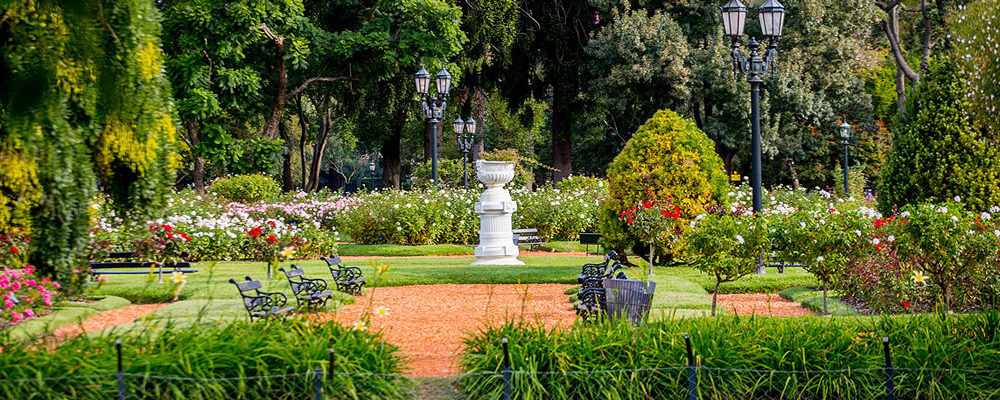
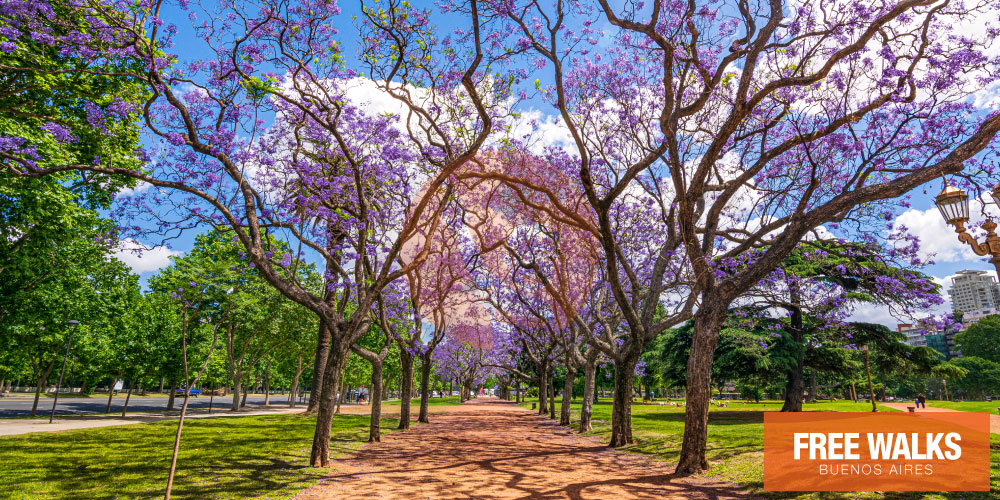
It is located just a few blocks from the renowned Rose Garden, being within the Palermo Parks, between Av. Libertador and Freyre.
It is formed as a path of restaurants and bars, breweries and pubs for all styles, tastes and cultures.
It has 36 thousand m2 and is located under the Mitre Railroad tracks.
The wealth of this space is to provide a plan for any time of the day, given that it is busy both day and night, and they have running schedules in many of the places that make it up.
If your walk through the Bosques de Palermo (Palermo Woods) requires a technical stop, this is a great option and you will find a variety of menus and places to sit and enjoy the outdoors without having to go far.
Keep in mind that it is a highly trafficked place, so you will see people circulating throughout the day. From the morning, having breakfast, until late at night.
Given its location, you will find several means of transport that bring you closer to this amazing gastronomy hub. You can get there by Subway, Bus or Train!
Botanical Garden, an immense space, full of nature, in the heart of Palermo.
If you like plants, trees and vegetables, this place is special for you!
With more than 7 hectares, it is the center of 6,000 plant species. As you walk through the Garden, each species has its name so that you can learn about each of the varieties found there.
Located on Av. Santa Fe and República Árabe Syria, it is an immense space of pure air, ideal for a day of walking, relaxation and learning.
It has 5 greenhouses, a botanical library, three gardens with French, Oriental and Roman styles, a herbarium and, many times, you will be able to find art samples in its beautiful English-style house.
Entrance is free and open.
We provide you with the garden hours so that you can plan your visit to the place well. On Mondays it is closed for cleaning and specific care. In summer(September 22 to April 21) it opens Tuesday to Friday from 8 a.m. to 6:45 p.m. and Saturday, Sunday and holidays from 9:30 a.m. to 6:45 p.m. In winter (April 22 to September 21)Tuesday to Friday open from 8 a.m. to 5:45 p.m. and Saturday, Sunday and holidays from 9:30 a.m. to 5:45 p.m.
We provide you with its location so you can see how to get there. Many means of transport reach this area, since it is one of the largest neighborhoods in Buenos Aires.
Japanese Garden, with elements of its own culture, is the only green space with distinctly Japanese characteristics. It is a corner that falls in love with everyone who visits it.
It was built in 1967, as a testimony to the visit of the Emperor of Japan, Akihito.
Located in the heart of Palermo, very close to the Bosques de Palermo, it is a space of harmony that cuts through the bustle of the city. It is like entering a world of Japanese fantasy. Without a doubt, we believe that you are going to fall in love with this wonder, so we recommend you go early and early. In this way, you will not be in a hurry and you can walk calmly throughout its interior.
Its trees are charming, and the entire structure of the garden is ornamented with traditional elements from Japan. It has native trees such as Tipa and Palo Borracho, and also a great variety of typical Japanese plants such as sakura and azaleas.
Another note of color is that in the lagoon you will find the typical Koi fish and carp of various colors.
All its elements seek balance and harmony. The bridges inside are symbols, such as the Bridge of God, curved and representing the way to paradise; the Truncated Bridge, which leads to the island of miraculous remedies, and the Bridge of decisions or Zig Zag Bridge.
In addition to its garden, it has a building that is a center for Japanese cultural activities for everyone who likes it. Also, it has an exhibition about their culture, with kimonos, paintings, origami and more. It has a typical Japanese restaurant to enjoy this delicious food, and a nursery to buy various plants and food for Koi fish, since it is forbidden to throw food at them that is not suitable. For those of us who like to have souvenirs, rest assured that there is a store with a variety of Japanese items where you will want to buy everything! It also has a Chashitsu (tea house), it is a space specially built to experience the traditional Japanese tea ceremony.
Ecopark in Buenos Aires, formerly known as the Palermo Zoo, which was closed and modified in 2016.
You may wonder what happened to all the species of animals that lived in that place… those that were in conditions of disease and / or rehabilitation are those that continued on this site (some are still waiting to be released to this day), and the rest were relocated to more suitable places for their animal life.
It is a park open to the public in the heart of Palermo. Located at Av. Sarmiento and Av. Las Heras, it is in charge of the Ministry of the Environment and Public Space of the City. Several Special Projects have been created for animal care.
It is an open-air space with 16.7 hectares, suitable for the whole family, dedicated to environmental education through recreational and immersive experiences.
Here, you can learn about caring for animals and natural environments, through educational and recreational experiences, as well as technology through virtual reality.
Currently, only 50% of the park is open to the public, since the rest continue in works of heritage recovery, readjustment of spaces and other works that add to animal welfare.
The entrance to the park is through Av. Sarmiento 2601 and its hours are from Wednesday to Sunday (and holidays), from 10 am to 5 pm. Closed due to rain!
Entrance is for free!
So, if you want to know a little more about the environment, the species and enjoy a day outdoors, this Ecopark is a wonderful option!
Full day in Palermo: Parks, culture and much to know!
In addition to our Free Tours in Buenos Aires, we also have suggested itineraries. These are tours that you can do on your own. In this case we introduce you a full day in Palermo.
Palermo is the largest neighborhood in Buenos Aires and is usually informally subdivided into several areas. For this reason, you will hear about Palermo Soho, Hollywood, Palermo Chico, Palermo Parks or others. The reason, again, its large size.
Being a neighborhood where the clash between nature, culture and nightlife occurs, there are many activities to do and, therefore, we are going to dedicate this article to tell you about the most popular ones and, also, those activities to escape the touristy regions.
You should take into account that Palermo is so big and has so much to see that the ideal is, if you go only for a day, to dedicate yourself to a specific area. You can also take Palermo into account if you are looking for a daytime activity or a night out, since the neighborhood has something for everyone.
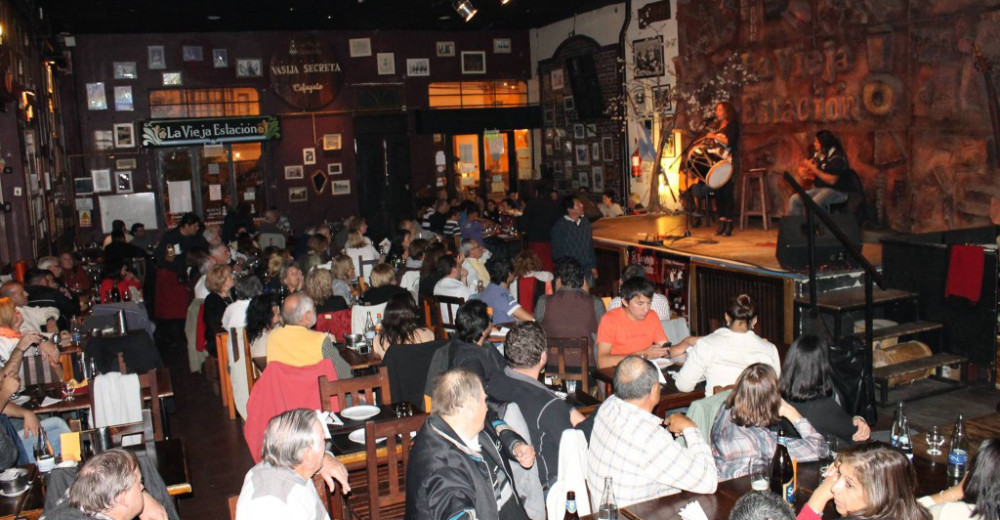
Peñas: Folk Music, all the information about where and how to find this amazing place in the city of Buenos Aires.
In a previous post we started talking about the music that we could find in Argentina. We talked about Tango and places to go in the city to enjoy it. But in Argentina is not all about Tango because we can find other important music styles, like Folk (Folclore).
It turns out that Tango, nowadays, is not so popular as we think.
In Buenos Aires, we can find an eclectic style not only in architecture, but also in the entire artistic and cultural environment.
This is why you don’t see much regional music with the naked eye.

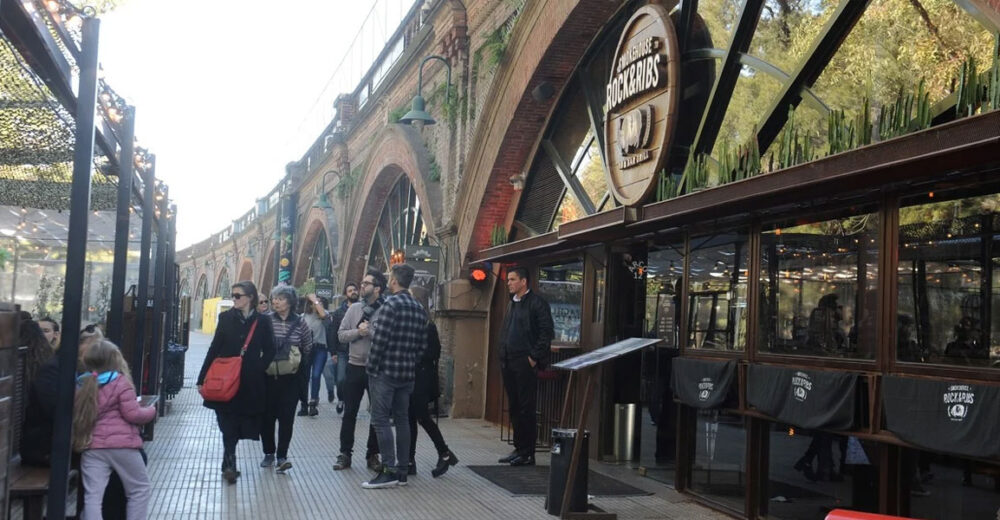
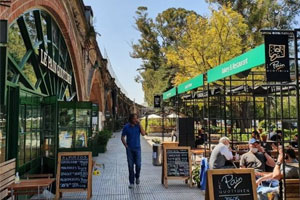 It is located just a few blocks from the renowned Rose Garden, being within the Palermo Parks, between Av. Libertador and Freyre.
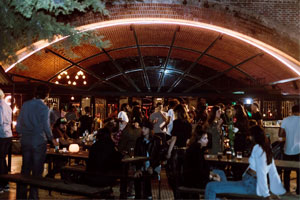 If your walk through the Bosques de Palermo (Palermo Woods) requires a technical stop, this is a great option and you will find a variety of menus and places to sit and enjoy the outdoors without having to go far.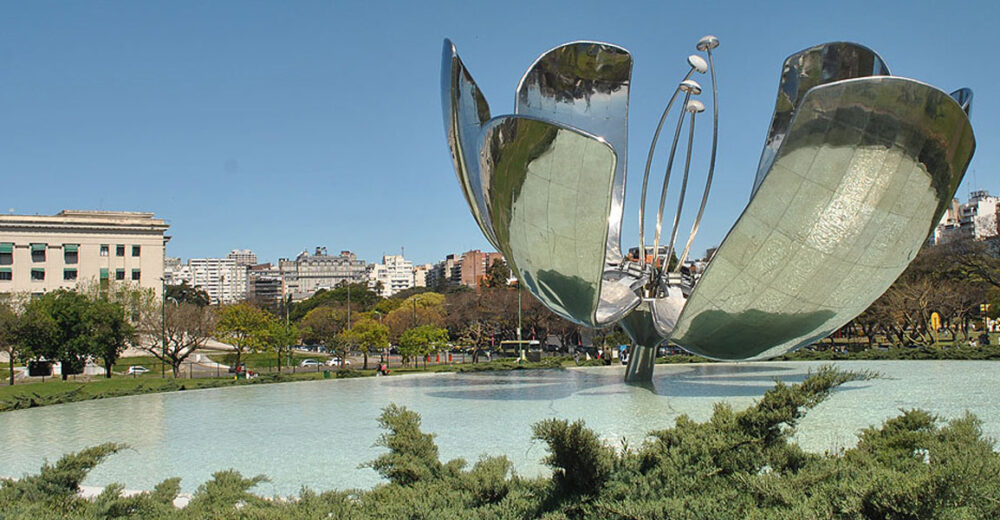
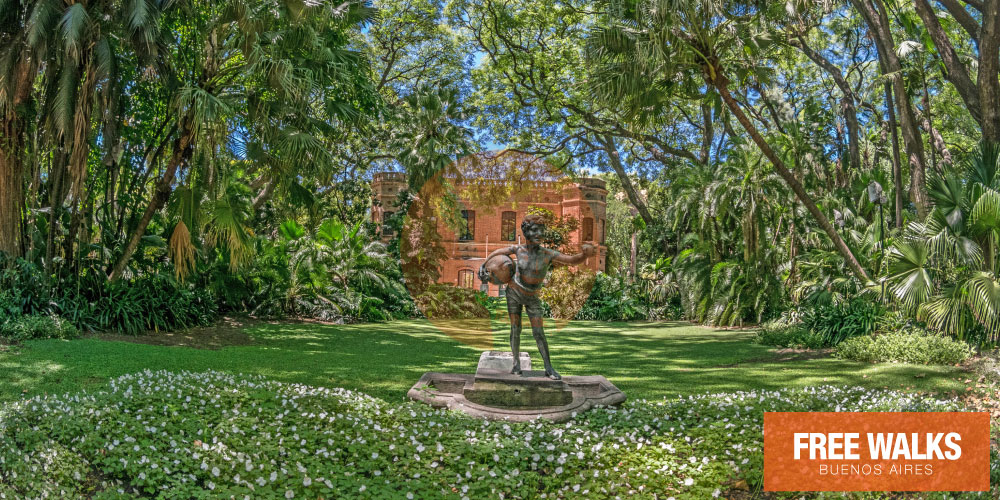
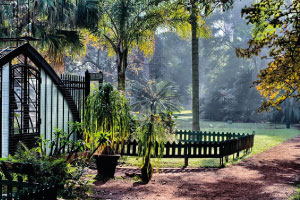 With more than 7 hectares, it is the center of 6,000 plant species. As you walk through the Garden, each species has its name so that you can learn about each of the varieties found there.
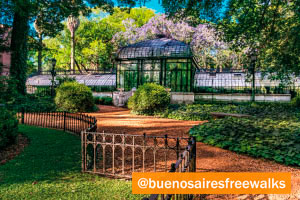 We provide you with the garden hours so that you can plan your visit to the place well. On Mondays it is closed for cleaning and specific care. In summer (September 22 to April 21) it opens Tuesday to Friday from 8 a.m. to 6:45 p.m. and Saturday, Sunday and holidays from 9:30 a.m. to 6:45 p.m. In winter (April 22 to September 21) Tuesday to Friday open from 8 a.m. to 5:45 p.m. and Saturday, Sunday and holidays from 9:30 a.m. to 5:45 p.m.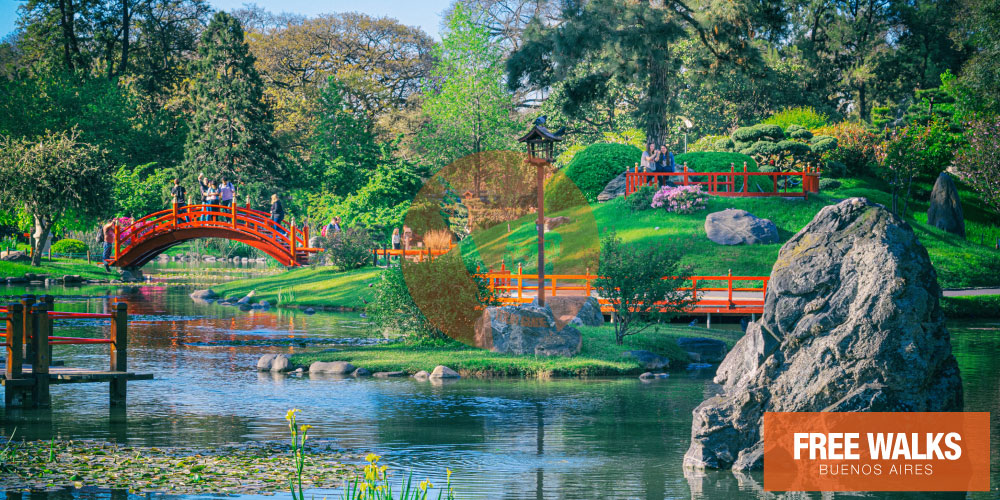
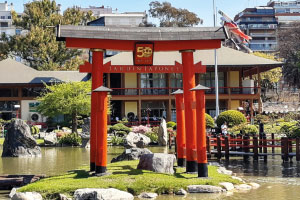 Located in the heart of Palermo, very close to the Bosques de Palermo, it is a space of harmony that cuts through the bustle of the city. It is like entering a world of Japanese fantasy. Without a doubt, we believe that you are going to fall in love with this wonder, so we recommend you go early and early. In this way, you will not be in a hurry and you can walk calmly throughout its interior.
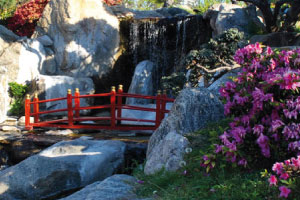 All its elements seek balance and harmony. The bridges inside are symbols, such as the Bridge of God, curved and representing the way to paradise; the Truncated Bridge, which leads to the island of miraculous remedies, and the Bridge of decisions or Zig Zag Bridge.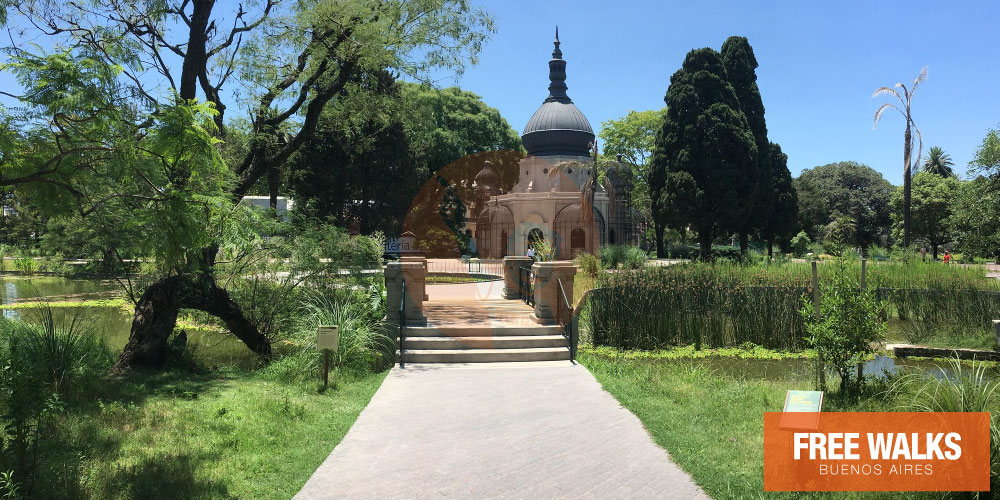
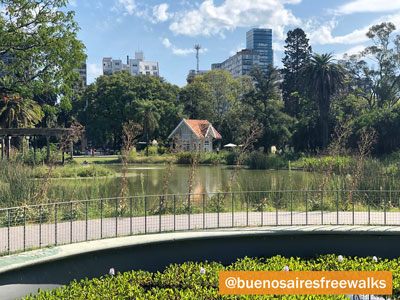 It is a park open to the public in the heart of Palermo. Located at Av. Sarmiento and Av. Las Heras, it is in charge of the Ministry of the Environment and Public Space of the City. Several Special Projects have been created for animal care.
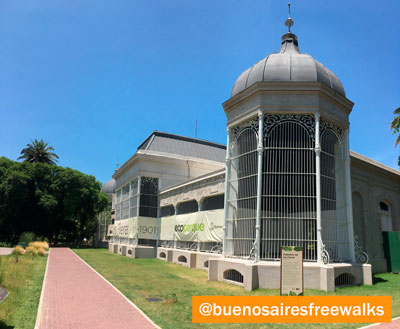 The entrance to the park is through Av. Sarmiento 2601 and its hours are from Wednesday to Sunday (and holidays), from 10 am to 5 pm. Closed due to rain!