Buenos Aires, the vibrant capital of Argentina, is a city full of life, culture, and diversity. With its blend of European architecture, iconic neighborhoods, and an ever-evolving gastronomic scene, it attracts millions of tourists every year. However, one of the most frequently asked questions among travelers is: Is Buenos Aires safe? In this updated guide for 2024, we provide a comprehensive overview of the city’s safety and practical tips to enjoy your stay without worries.
Airports of Buenos Aires: Complete Guide for Travelers
If you’re planning a trip to Buenos Aires, Argentina’s capital city, it’s essential to know about the city’s two main airports: Aeroparque Jorge Newbery (AEP) and Ministro Pistarini International Airport (Ezeiza – EZE). Each has unique features making it ideal for different types of flights and travelers. This guide provides all the information you need about these airports, from their services to how to travel between them and to the city center.
Travel Insurance for Latin America: Everything You Need to Know for Your Next Trip
Traveling through Latin America is an enriching experience full of culture, stunning landscapes, and adventures. However, to enjoy your trip without worries, having good travel insurance is essential. Travel insurance is not just a safety measure; it’s also a way to protect your investment and health during your adventure. In this article, we’ll cover everything you need to know about travel insurance for Latin America.
Private Tours for Companies and Institutions in Buenos Aires
Buenos Aires, the vibrant capital of Argentina, is an ideal destination not only for tourists but also for companies, embassies, and institutions seeking unique experiences for their delegations, clients, or employees. If you’re looking for an exclusive tour tailored to the specific needs of your organization, a private tour in Buenos Aires is the perfect option to explore the city with style and comfort.
In the last decade, the authenticity of visited destinations has been more valued than ever before. This is why Free Walking Tours, also known as Free Tours, have become increasingly popular in almost every city around the world. These tours offer authenticity and the discovery of destinations through a passionate local guide. Below, we invite you to learn how Free Tours work and why they are one of the top choices for travelers worldwide.
Starting from the year 2023, tourists and non-residents of Argentina can access a more beneficial exchange rate than the official rate for the US dollar. This is a legal transaction through credit and debit card purchases.
Curiosities about Plaza de Mayo, its history, secrets and much more!
It’s the oldest plaza in the city. But it hasn’t always been this big, nor had that name.
In 1580, the founder of the city, Juan de Garay, created a plaza called Plaza Mayor in the part of town that today is limited by Rivadavia Ave., Hipólito Yrigoyen St., Defensa St, y Bolívar St. Towards the west, in what today is Rivadavia Ave., Yrigoyen St., Defensa St. and Balcarce Stt, there was a plot of barren land that in time would be known as Plaza de Armas.
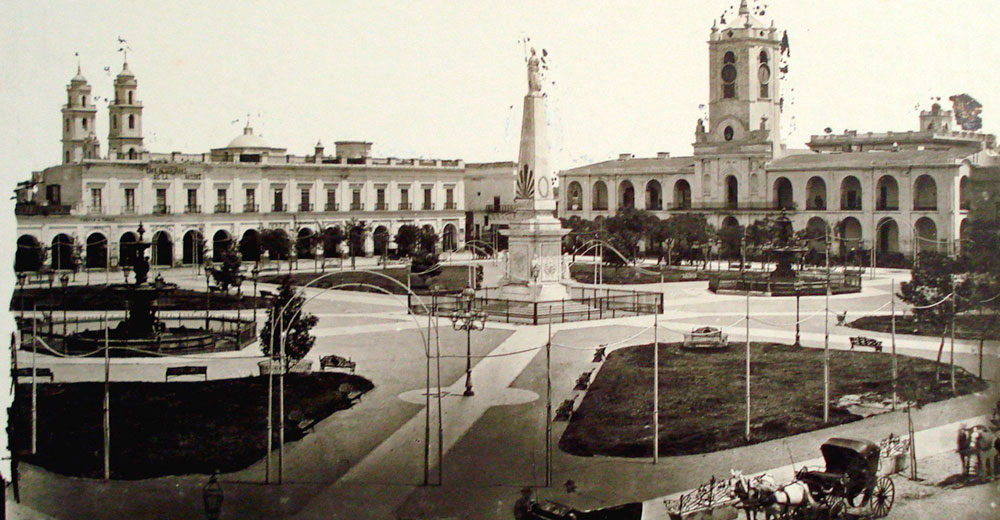
Both plazas were unified in 1884, creating the 2-hectare plaza we know today. Its name honours the Argentinean Revolution for Independence of 1810.
La Recova of Buenos Aires
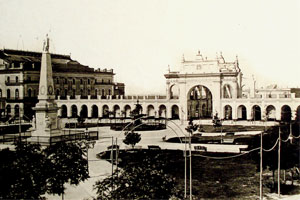
Between the first two squares, during the years 1804 and 1884, there was a building called La Recova. This construction consisted of two bodies of 11 arches each, joined in the middle by a large central arch that connected the two squares. This was the first shopping in the city. Here, you could buy all kinds of products, from shoes and clothes to meat and vegetables.
La Recova was demolished in 1884 to create the Plaza de Mayo.
The Pirámide de Mayo
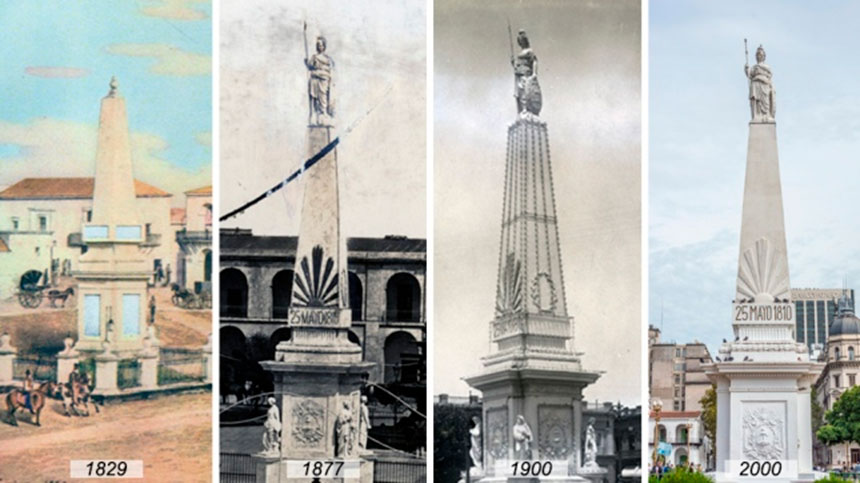
Built in 1811, it is the first patriotic monument of the city. It celebrates the first anniversary of the May Revolution. But the monument we see today is not the original. The original monument is hidden inside the structure we see today. By 1856, the pyramid was very neglected, so the artist Prilidiano Pueyrredon restored it. He built a new pyramid around it and added a small Statue of Liberty that wears Phrygian cap in representation of the Argentinean Republic.
The Hollow of the Souls
It was believed that in today’s corner of Reconquista St and Rivadavia Ave. there used to be a place where the devil and the witches gathered to perform rituals. It was an area with unfinished buildings where the homeless laid to sleep. As the first Colon Theatre as built, the hollow disappeared.
Public executions
The western part of the plaza was the place for public executions. Thieves were hanged or shot in front of the people. Their bodies were left hanging for a couple of hours.
Bullfights
In 1609 the first bullfight was organized on what used to be Plaza Mayor. It took two centuries to finally forbid them. Until then, the balconies of the buildings around the plaza were rented as theatre boxes, while the authorities and the most important people watched the bullfight from the balcony of the Cabildo (the house of government). These bullfights were followed by different performances with actors, dwarfs and masks.
The Fort
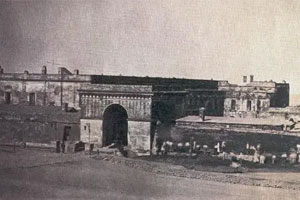
In the area where today we find the Pink House, there used to be a stone fortification built in 1598 to keep European pirates away. Although the fort was demolished in 1882, you can see find some of its walls in the Pink House Museum.
The Walking Tour offered in Buenos Aires was originated in Europe precisely in Berlin, Germany. It started when a tourist tired of high prices in tours, decided to provide quality tours for everyone, letting them decide the price. The modality proposes a tour under the concept of paying what one is willing to do, that is to say, tip-based.
The tip that the tourist leaves is influenced by several factors, not only varies according to the quality of the tour received, which implies a good guide, but also fits to everyone’s pocket. In this Tours participate people from high class to backpackers, who seek to enjoy the city spending the minimum necessary.
This type of tours, quickly expanded throughout the world to land in Buenos Aires in 2013.
Buenos Aires Free Walking Tours
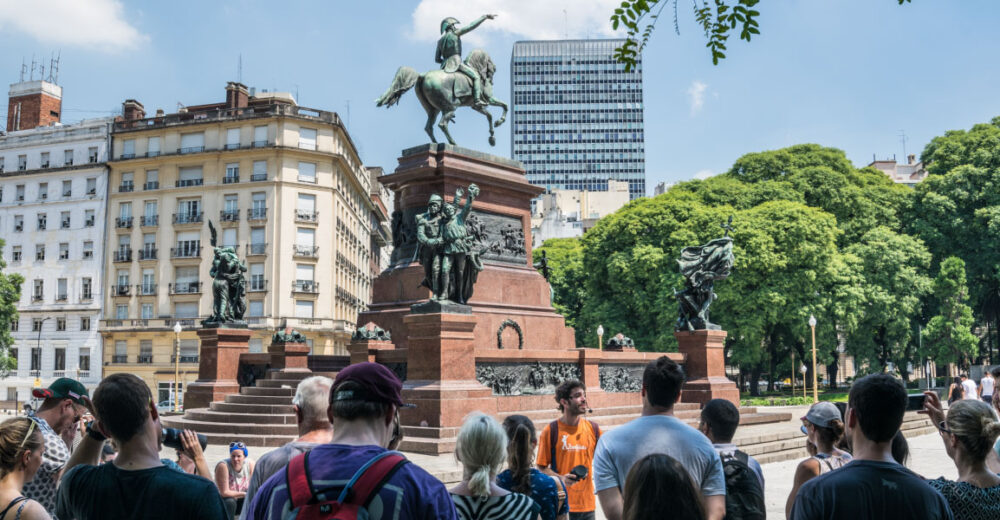
The Walking Tours in Buenos Aires are provided by the company Buenos Aires Free Walks, the most popular in Latin America. We invite you to enjoy it, regardless of your budget. The company provides 2 tours per day, every day of the year except for Christmas and New Year, even if it rains! Check the walking tours!
Global Free Walking Tours Network
Global Free Tours is a website that is developing a Free Tours network in all cities of the world.It includes the best Tours of each city, developed by local entrepreneurs and not multinationals.
In the previous article we talked about the Best Catholic Churches that can be found in the City of Buenos Aires, since more than 90% of Argentina’s population is Catholic, it is possible to see many basilicas and imposing churches built since colonial times.



 In the area where today we find the Pink House, there used to be a stone fortification built in 1598 to keep European pirates away. Although the fort was demolished in 1882, you can see find some of its walls in the Pink House Museum.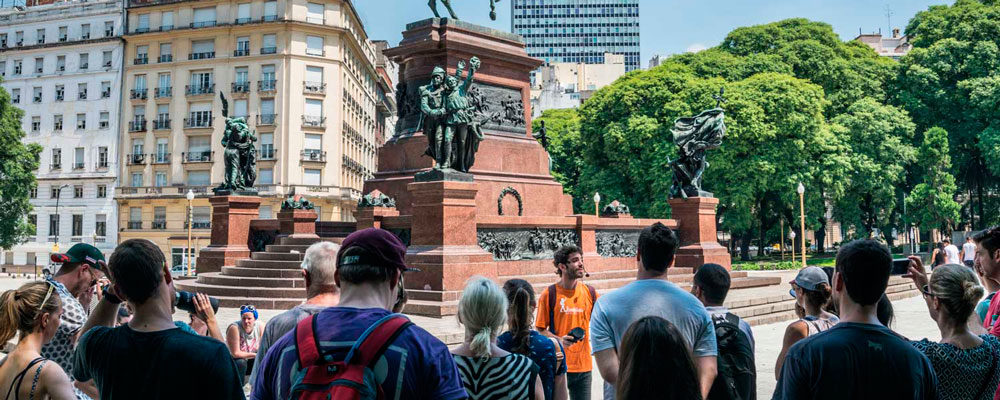
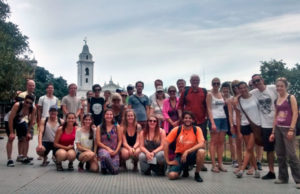 The tip that the tourist leaves is influenced by several factors, not only varies according to the quality of the tour received, which implies a good guide, but also fits to everyone’s pocket. In this Tours participate people from high class to backpackers, who seek to enjoy the city spending the minimum necessary.